Skip to content

Why plant cleaning drifts even when a scope exists
A manufacturing plant or warehouse is one of the most controlled environments in any business. Suppliers are approved, chemicals are listed, safety procedures are written down, and audits check that it all holds.
Cleaning is usually the exception. The scope exists, the crew shows up, and the tasks get done. But floors look different on Monday than on Thursday, dust is back on the racking two weeks after it was removed, and the breakroom is fine at 6 a.m. and a problem by noon.
That happens for four reasons:
- The plant changes every shift. Forklifts, pallets, incoming materials, and airborne dust re-soil surfaces continuously. Cleaning doesn’t restore a fixed state; it has to hold conditions in a moving environment.
- Different people clean differently. Night crews, weekend crews, and fill-ins each make their own calls on method and order. Same scope, different result.
- Production wins when time is short. When a line runs late or a shipment lands, cleaning gets compressed or skipped, and nobody records what was missed.
- Inspections find problems after the fact. Audits and walkthroughs measure the result. They don’t control how the work was done, so the same issues come back.
None of these are effort problems. They’re control problems, and they have the same fixes as any other plant process.
Where conditions slip first
| Area | What changes it | What control looks like |
|---|---|---|
| Warehouse aisles and dock floors | Forklift traffic, pallet debris, winter salt and sand at dock doors | A fixed sweep and scrub route by traffic level; dock areas cleared before shift change; matting changed on schedule |
| Production-adjacent floors | Dust, drips, small spills from material handling | A defined method per floor type, cleaning only in approved windows, and a named owner for spill response |
| High surfaces (beams, ducts, light fixtures, rack tops) | Airborne dust settling over weeks | Planned high dusting, scheduled around shutdowns and done under the site’s lift and fall-protection rules |
| Breakrooms, locker rooms, restrooms | Surges at shift change, food waste, heavy use | Service timed just before shift change, plus a mid-shift restock on long shifts |
| Entrances and transition zones | Dirt tracked from the warehouse into offices | A matting program and extra attention at peak traffic times |
| Offices, conference rooms, QA areas | Lower traffic, but these are where visitors and auditors sit | A standard nightly scope, held to an office standard |
What a controlled cleaning program looks like in a plant
1. A zone map, not just a task list
A task list says what to do. A zone map says where, how, how often, and with what. Each zone gets a defined method for its floor and surface types, a frequency based on how fast it re-soils, the products your plant has approved for that area, and the person responsible for it. (For the broader framework, see how to design a commercial cleaning program.)
2. A schedule built around production
Cleaning should fit shift times, line changeovers, and planned shutdowns, not compete with them. The schedule also needs to reflect your site rules: areas that require an escort, PPE requirements, lockout zones the crew never enters, and where Safety Data Sheets are kept.
3. Recorded shift handoffs
When one crew hands off to the next, three things should be written down: what was completed, what was skipped and why, and what needs attention next. This is what stops small misses from becoming patterns.
4. Checks during the work, not only after
A supervisor who checks at set points during the shift catches drift while it can still be fixed. When something is missed, it should be resolved within 24 hours, and usually much sooner, often the same day, with a corrective action so it doesn’t repeat.
5. Periodic work planned in advance
Floor scrubbing and restoration, high dusting, degreasing, and exterior power washing shouldn’t wait until something looks bad. Put them on a calendar that lines up with your shutdowns and slow periods.
6. One person who owns the outcome
Your plant manager shouldn’t have to manage the cleaning crew. There should be a single point of contact on the cleaning side who answers for results, attends walkthroughs, and closes issues.
What this looks like in practice
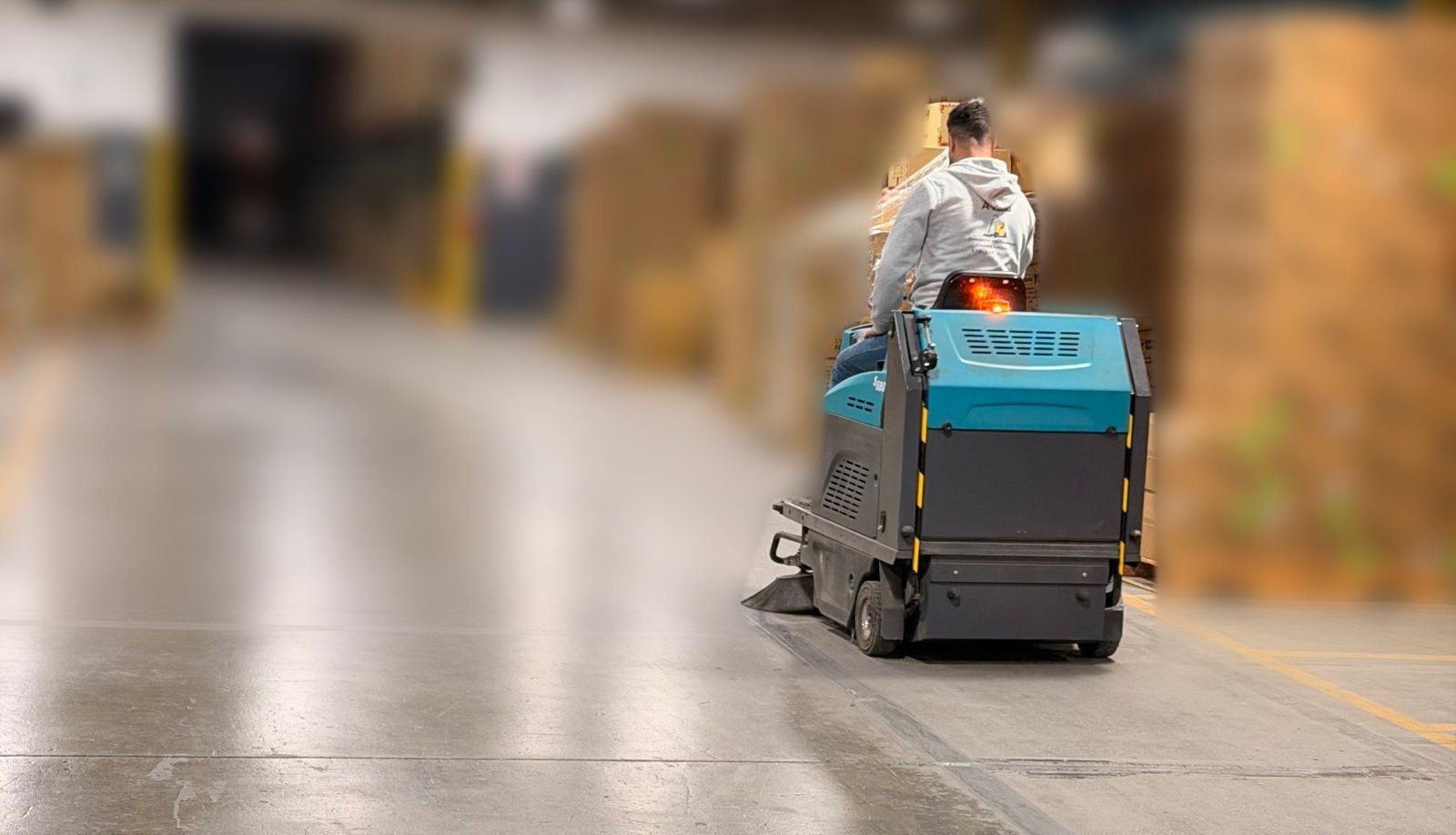
ATEB maintains a 90,000-square-foot warehouse and office facility for a sporting goods manufacturer in Leominster, MA. The scope covers the shared common areas, the office spaces, carpet care, and sweeping the warehouse floor with a ride-on sweeper. Service runs once a week, with a short list of monthly tasks on a set schedule, so the periodic work happens on a calendar instead of waiting until something looks worn. It’s a good example of matching frequency to how each area is actually used rather than defaulting to nightly service.
At a manufacturing facility in West Brookfield, MA, the same approach produces a different schedule: ATEB cleans the offices, restrooms, carpets, and other common areas twice a week, because that site’s use calls for it. Two plants, two frequencies, each set by conditions rather than habit.
How cleaning fits your audit and compliance programs
Many plants run GMP, food-safety, or internal audit programs. Those programs define what the environment has to look like. The cleaning contractor’s job is to work inside them: use your approved chemicals, follow your access and PPE rules, keep records your auditors can read, and close findings quickly.
A cleaning contractor doesn’t make a facility compliant. What it can do is make sure the environment matches what your program already requires, every shift, so that an audit finds what you expect it to find. For a closer look at what auditors notice, see What Auditors Look For: 6 Cleaning Gaps That Lead to Audit Findings. If a finding happens anyway, our corrective action plan guide walks through the response step by step.
Questions to ask a cleaning contractor for your plant
- How will you map zones and methods for our floors, production-adjacent areas, and shared spaces?
- Who supervises the night and weekend crews, and how often are they physically on site?
- How do you record shift handoffs and missed tasks?
- What happens when our production schedule changes?
- Can your crew work under our PPE, escort, and lockout rules?
- How do you schedule high dusting and floor scrubbing around our shutdowns?
- How fast are complaints fixed, and what corrective action follows?
- What will we see each week to know the program is holding?
What it costs
Plant and warehouse cleaning is priced by the labor hours the scope actually requires, which depends on square footage, floor types, traffic, shift coverage, and how much periodic work is included. A large, lightly used storage area can cost less to maintain than a smaller, busy production floor. For how commercial cleaning pricing works in Massachusetts and New Hampshire, see our commercial cleaning cost guide.
Frequently asked questions
How often should a warehouse floor be cleaned?
It depends on traffic. High-traffic aisles and dock areas often need sweeping or scrubbing daily, while low-traffic storage areas may only need weekly attention. Set frequency by how fast each zone re-soils, not by a fixed calendar.
Can cleaning happen while production is running?
Yes, in shared spaces, offices, and zones your plant approves. Production areas are usually cleaned during set windows, changeovers, or shutdowns.
What is high dusting, and how often is it needed?
High dusting removes built-up dust from beams, ducts, light fixtures, and rack tops. Many plants schedule it quarterly or twice a year, more often in dusty processes.
Do you use our cleaning chemicals or yours?
Either works, but anything used near production should be on your plant’s approved list, with Safety Data Sheets on site.
Do you clean manufacturing plants and warehouses in Massachusetts and New Hampshire?
Yes. ATEB serves facilities across Worcester County, North Central Massachusetts, the Merrimack Valley, MetroWest, and Southern New Hampshire from our offices in Leominster, MA and Nashua, NH.
Schedule a plant walkthrough
We’ll map your zones, look at how conditions change across shifts, and show you what a controlled program would look like for your plant. Schedule a walkthrough or see our manufacturing and warehouse cleaning services.