 Skip to content

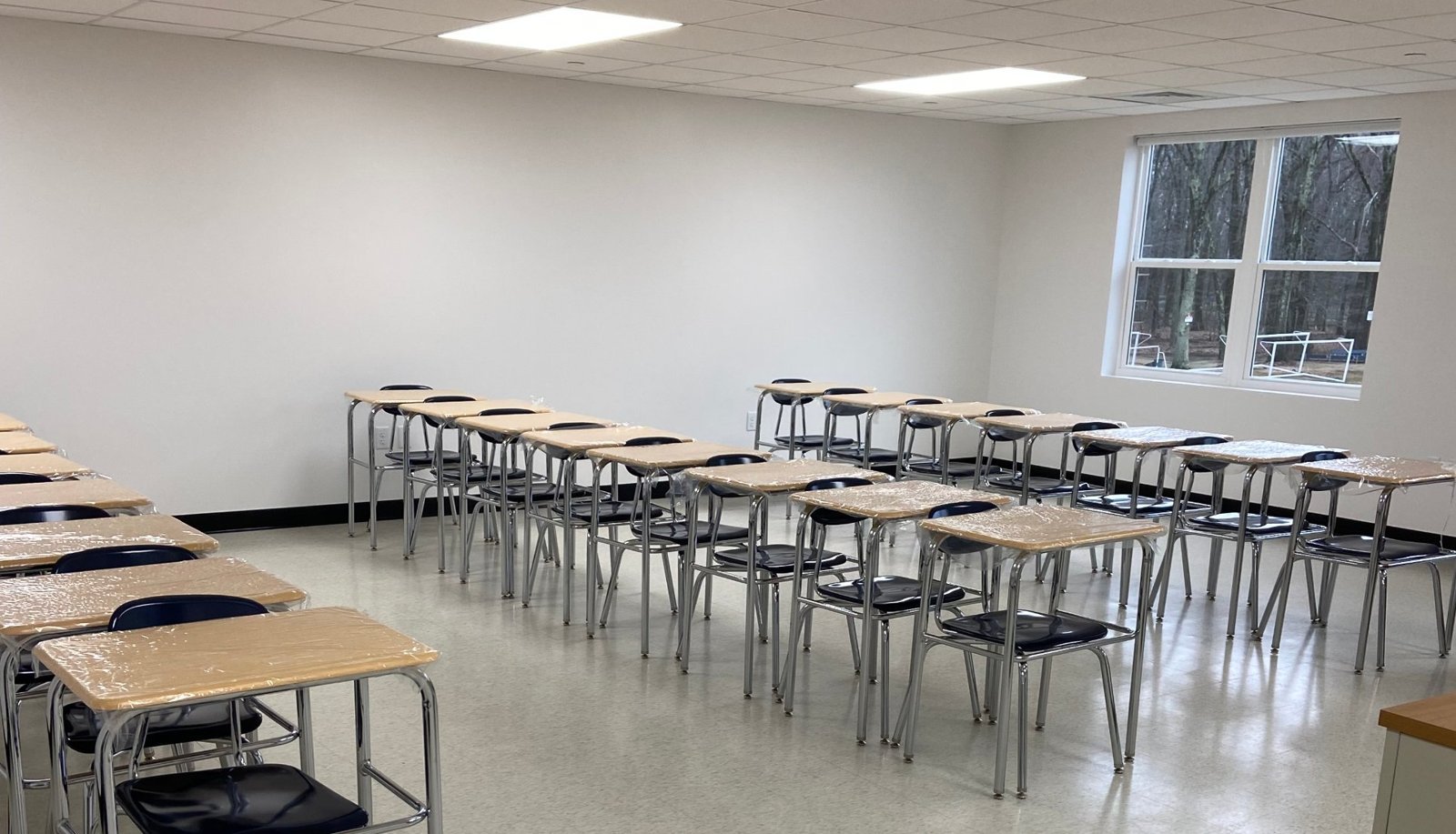
Why school cleaning is different
A school is cleaned under conditions most office buildings never face:
- Hundreds of children use the same restrooms, desks, and door handles every day.
- Cafeterias and gyms generate food waste, spills, and floor wear that offices don’t.
- The building is busy almost every day from early morning through after-school programs, sports, and community use, which leaves a narrow cleaning window.
- Breaks matter. Summer and vacation weeks are the only time for floor refinishing, carpet extraction, and deep work.
- Safety and trust come first. Parents, staff, and administrators expect the people in the building after hours to be vetted and supervised.
That is why a school cleaning scope looks different from an office scope, and why the contractor you choose matters as much as the schedule. See how we approach educational facilities.
What to require from a school cleaning contractor
1. Background checks for anyone who may be alone around students
Under Massachusetts law, schools must run CORI checks on employees and volunteers who may have direct and unmonitored contact with children, and the law allows schools to run checks on contractors and laborers working on school grounds as well. Ask how the contractor screens its staff, whether crews can work under your district’s CORI policy, and who on the crew might be in the building while students are present.
ATEB runs CORI checks on every crew member assigned to school work, as a standard practice, including the crew on the Greater Lowell Technical High School project.
2. A written scope by area, not one checklist for the whole building
Classrooms, restrooms, cafeterias, gyms, offices, and hallways each need their own tasks and frequency. A written scope by area is what makes the work checkable.
For typical frequencies by facility type, see how often a commercial facility should be cleaned. New wings and renovations need their own plan; see post-construction cleaning phases.
3. More attention where children concentrate
Restrooms and cafeterias are where problems start and where parents notice. Many schools need restroom checks during the day as well as at night, and cafeteria cleaning right after lunch periods, not only after the building empties. That is where day porter coverage helps.
4. A floor program built around breaks
School floors take more abuse than almost any commercial floor. Most hard floors in schools are refinished once a year, usually in summer, with scrubbing and burnishing during the year and carpet extraction during vacation weeks. A good contractor plans that floor care calendar with you at the start of the school year.
5. Supervision you can actually reach
Ask who supervises the night crew, how often they are on site, and who your facilities director calls when something is missed. Misses should be resolved within 24 hours, and usually much sooner, often the same day.
6. Products chosen for a building full of children
Many districts prefer fragrance-free or environmentally preferable products, and disinfectants used according to their labels on high-touch surfaces. Ask what the contractor uses, where, and whether it can follow your district’s product list.
ATEB uses fragrance-free or green-certified products whenever a school requires them.
7. A plan for days that don’t go to plan
Illness outbreaks, flooding, a burst pipe over a weekend, or an event in the gym the night before school: ask how fast the contractor can add crew and what it costs.
Typical nightly and periodic school scope
| Area | Routine | Periodic |
|---|---|---|
| Classrooms | Trash, desks and high-touch surfaces, floors vacuumed or dust-mopped | Desk and chair detailing, carpet extraction during breaks |
| Restrooms | Cleaned, disinfected, and restocked nightly; daytime checks in busy schools | Deep scrubbing of floors and grout |
| Cafeteria | Tables and floors after lunch periods and nightly | Floor scrubbing, kitchen-adjacent deep cleaning |
| Gym and locker rooms | Floors and locker rooms nightly | Gym floor care per the floor manufacturer’s guidance |
| Hallways and entrances | Floors and entry mats nightly; extra attention in winter | Strip and refinish in summer, burnishing during the year |
| Offices and staff rooms | Standard office cleaning | Carpet extraction, high dusting |
Working alongside in-house custodians
Many Massachusetts districts keep their own custodial staff and use a contractor to cover nights, add capacity, handle summer projects, or support a building opening. Ask the contractor how it divides work with your custodians, so nothing falls between the two teams and nothing gets cleaned twice.
Public schools: how contracts are usually bought
Massachusetts public schools buy cleaning services under Chapter 30B. For most municipal and regional school districts, contracts above $100,000 require sealed bids or proposals, and smaller contracts use written quotes. That makes a clear written scope even more important: bidders can only price what is written down, and the lowest bid on a vague scope often becomes the most expensive contract. Your procurement officer will know the exact rules for your district.
Private and charter schools have more flexibility, which makes a walkthrough-based proposal the easiest way to compare contractors on the same scope.
A real example: a 500,000 sq ft school expansion
ATEB handled post-construction cleaning for the expansion of Greater Lowell Technical High School in Tyngsborough, MA: a 500,000-square-foot project cleaned in two phases aligned with construction and inspection milestones, including high window cleaning in freezing winter conditions. Every crew member was CORI-checked before working on site, and classrooms, hallways, stairwells, and restrooms were brought to inspection-ready condition before turnover. Read the case study.
Questions to ask before you sign
- How do you screen staff, and can your crews work under our CORI policy?
- Who supervises the night crew, and how do we reach them?
- What does your nightly scope look like for each area of our building?
- How do you handle restrooms and the cafeteria during the school day?
- What is your summer and vacation-week floor plan, and is it in the price?
- What products do you use around students?
- How fast are misses fixed, and what happens after?
Frequently asked questions
Do school cleaning contractors in Massachusetts need background checks?
Massachusetts requires CORI checks for school employees and volunteers who may have unsupervised contact with children, and allows schools to check contractors working on school grounds. Most districts set the requirement for contractors in their CORI policy and contract.
How often should school restrooms be cleaned?
At least nightly, with daytime checks and restocking in busy buildings, especially elementary schools and schools with large enrollment.
When should school floors be stripped and refinished?
Most schools do it once a year in summer, with scrubbing and burnishing during the year to extend the finish.
Can a contractor work alongside our district custodians?
Yes. Many districts use a contractor for night coverage, summer projects, or extra capacity, with a written split of responsibilities.
Do you clean schools outside Massachusetts?
ATEB serves schools across Worcester County, North Central Massachusetts, the Merrimack Valley, MetroWest, and Southern New Hampshire, from offices in Leominster, MA and Nashua, NH.
Schedule a school walkthrough
We’ll review your building, schedule, and custodial setup, and give you a written scope by area. Schedule a walkthrough.


